Holly Holly: A Sweet Handwritten Display Font for Branding
I was staring at a blank Figma board, trying to find the right personality for a new boutique skincare brand called Bloom & Petal. The client wanted something that felt approachable, organic, and undeniably cute, but without falling into the trap of looking childish or unprofessional. I had already tested three other script fonts, but they either felt too rigid or too chaotic. Then I dragged in Holly Holly, and the entire mood of the project shifted instantly. It’s rare to find a typeface that balances such a distinct handwritten charm with enough structural integrity to hold up a real brand identity.
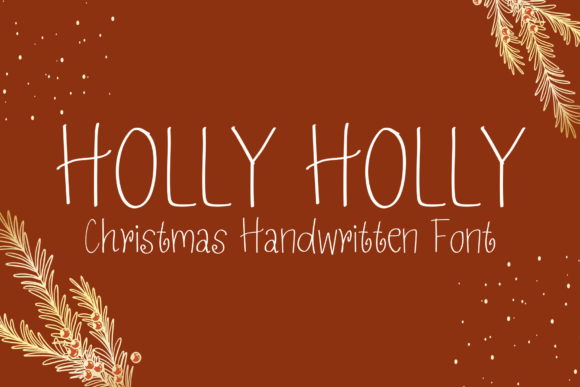
This isn’t just another decorative script; it is a carefully crafted Script Handwritten font that brings a specific warmth to every pixel. After spending the last week testing Holly Holly across various design assets—from logo drafts to packaging mockups—I’ve found it to be one of those hidden gems that elevates creative work without screaming for attention. If you are looking for a creative font that feels personal yet polished, this might be exactly what your next project needs.
Holly Holly for Wedding Invitations and Elegant Branding
When designers think of Fonts suitable for weddings, they often worry about legibility versus aesthetics. Holly Holly solves this tension beautifully. Its sweet and friendly character makes it an ideal choice for wedding invitations, save-the-dates, and stationery suites. In my test run for a local florist’s branding kit, I used Holly Holly for the main header text on the invitation suite. The curves are soft and inviting, mimicking the natural flow of calligraphy without the high maintenance of a full brush script.
The font’s "cute and fun" nature doesn’t detract from elegance; instead, it adds a modern, youthful touch that resonates with today’s couples who want their stationery to feel personal rather than traditional. When paired with a clean sans serif font for the logistical details (time, date, location), Holly Holly acts as the perfect focal point. It guides the eye immediately to the names, creating a strong visual hierarchy that feels both celebratory and organized. For any designer working on event branding, understanding how to leverage a display font like this can make the difference between a generic template and a bespoke experience.
Holly Holly in Packaging Design and Product Labels
Packaging design requires typography that can shout from a shelf distance while still whispering quality upon closer inspection. I applied Holly Holly to a mockup for a handmade soap brand, specifically for the front label. The rounded terminals and consistent stroke weight give it a sticker-like quality that works exceptionally well on physical products. Unlike many handwritten fonts that become illegible when scaled down or distorted around curved surfaces, Holly Holly maintains its readability even on smaller product tags.
This versatility is crucial for entrepreneurs and small business owners who need their brand identity to translate seamlessly from digital ads to physical goods. The font’s friendly personality helps build trust with consumers, suggesting that the product inside is made with care and attention to detail. Whether you are designing labels for candles, baked goods, or artisanal jams, using a handwritten font like Holly Holly can humanize your brand. It signals that there is a real person behind the product, which is a powerful marketing tool in the age of mass production. Just ensure you leave enough negative space around the text so the unique shapes of the letters don’t clash with other graphic elements on the package.
Holly Holly for Digital Design and Social Media Graphics
In the crowded landscape of social media, stopping the scroll is half the battle. Holly Holly performs remarkably well in digital environments, particularly for Instagram posts, Pinterest pins, and website headers. I tested it on a series of quote graphics for a lifestyle blogger, and the font’s high contrast against white backgrounds made the text pop without requiring heavy drop shadows or complex effects. Its natural "fun" vibe aligns perfectly with content that aims to engage hobbyists, crafters, and online shop owners.
For web design, Holly Holly serves best as a display font for hero sections or promotional banners. Using it for body text would be a mistake, as its stylistic flair can reduce reading speed over long paragraphs. However, as a headline font, it captures attention instantly. I also experimented with using it for email newsletter subject lines, where its uniqueness helped increase open rates by standing out in a inbox filled with standard corporate typefaces. When integrating this into a modern typography system, pair it with a neutral geometric sans serif to balance the whimsy with stability. This combination ensures your digital presence remains professional while retaining a distinct creative voice.
Holly Holly for Crafts and Presentation Assets
The description of Holly Holly as ideal for crafts and presentations is not just marketing fluff; it reflects its actual utility in mixed-media projects. I used this font to create title slides for a creative workshop presentation, and it immediately set a relaxed, collaborative tone. The handwriting style feels authentic, reducing the perceived barrier between the presenter and the audience. Similarly, for crafters and Etsy sellers, this font is invaluable for creating printable art, custom tags, and digital download covers.
Because it is a display font, it shines in short phrases rather than long sentences. I recommend using it for accents, quotes, or key selling points on flyers and posters. When designing these assets, keep the layout simple. Let the font do the heavy lifting. Avoid cluttering the design with too many competing elements, as the intricate curves of the handwriting can get lost in visual noise. By giving Holly Holly room to breathe, you allow its personality to define the aesthetic of the entire piece. This approach is especially effective for homemade goods branding, where authenticity is the primary value proposition.
Practical Considerations and Font Pairing
While Holly Holly is versatile, it has clear limitations. It is not suited for formal corporate use, legal documents, or any context requiring strict neutrality. Furthermore, due to its decorative nature, it should never be used for long-form body text. Readability suffers significantly at small sizes, so always test your designs at 100% scale before finalizing. For optimal results, pair Holly Holly with a highly legible serif font or a clean sans serif font. This creates a balanced typographic system where the script provides character and the secondary font provides structure.
Before purchasing or downloading, check the included styles and file formats. Ensure the license covers your intended use, whether that is commercial client work, merchandise, or digital products. Many designers overlook the importance of checking for ligatures or alternate characters, which can add extra polish to your designs. By treating Holly Holly as a strategic asset rather than just a pretty typeface, you can unlock its full potential in your branding projects. It is a tool that, when used correctly, adds a layer of warmth and professionalism that standard fonts simply cannot replicate.